
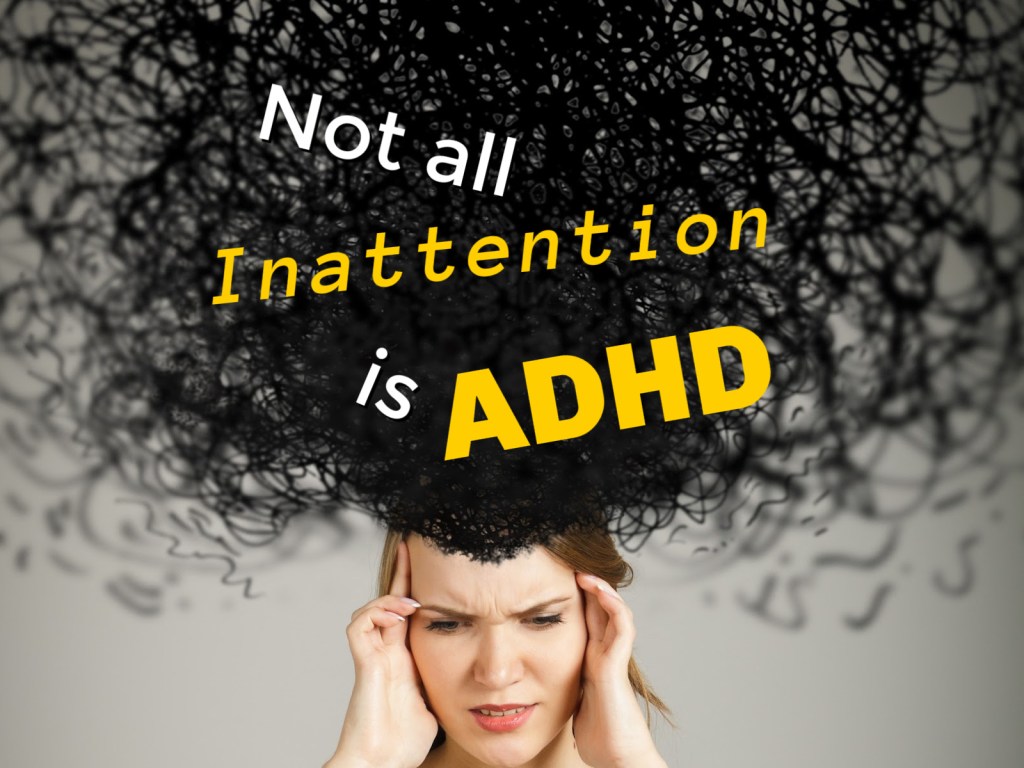
Attention deficit-hyperactive disorder (ADHD) has taken the diagnostic spotlight in recent years. In a world of distractions, it can feel sometimes near-impossible to stay focused. However, every time a mental health diagnosis becomes more assessed, and more talked about, sometimes it becomes the go-to answer. However, inattention is drastically more complex than just ADHD. In fact, it has so many other roles in other diagnoses that labeling any inattention as ADHD may keep you from addressing other devastating issues. In this article, we’ll explore sources of inattention other than ADHD that often go overlooked. First, we’ll start with how ADHD is diagnosed by professionals.
What is an ADHD Diagnosis?
ADHD is a mental health diagnosis in the DSM-V, the current guiding manual for mental health professionals. To qualify for an initial diagnosis of ADHD, you must meet a certain amount of symptom criteria. For ADHD, the two larger subsets of symptoms are (1) attention deficit and (2) hyperactivity. Regarding inattention, here are the DSM-V symptoms:
- Inattention for at least 6 months with noticeable effects on social, academic, or occupational functioning
- Frequent and careless mistakes with work due to lack of focus
- Difficulty sustaining attention for long periods of time (lectures, meetings, reading)
- Appearing distracted when directly spoken to
- Not following through on tasks, assignments, or chores due to distractions
- Avoiding or disliking tasks that require sustained attention
- Frequently losing or misplacing items necessary for tasks (phone, keys, papers)
- Easily distracted by external stimuli at home or in public
- Forgetful throughout the day (missing appointments, failing to return calls)
If you struggle with inattention, you might find yourself experiencing some of these symptoms. However, there are a few key important things to remember:
- These symptoms must be so pervasive and frequent they actively disrupt your social life, work, or home life. If you forget something every once in a while, that’s totally normal. Not every cough is a sign of Tuberculosis, and not all inattention is a sign of ADHD.
- This is only half the assessment needed to determine an ADHD diagnosis. Because ADHD is a neurological disorder, it needs neurological testing. This means if you meet these criteria by reading this, or even run into this in therapy, then it would be best to solidify the diagnosis by getting an official ADHD test (these are administered in official testing centers. If you want one, you can probably find one near you or ask your therapist for a referral).
The Problem with Self-Diagnosed ADHD
When you become a mental health professional, it’s common to be tested on the contents of the DSM-V. This means you have to study every detail of every diagnosis. When you do this, you discover plenty of overlap between diagnoses. For example, depression, anxiety, and a slew of other disorders include the symptom (a) disrupted sleeping pattern. However, this doesn’t mean that everyone has insomnia as a primary diagnosis. Insomnia would be a singular symptom in a larger diagnosis of anxiety or depression, which are linked to certain events, thoughts, or circumstances that can be addressed in psychotherapy. Why would it be dangerous to just assume someone with anxiety or depression just has insomnia instead? Because for the sake of a single symptom, an entire disorder is ignored. As a result, you continue to suffer thinking you have the answer.
Diagnoses Other than ADHD that Involve Inattention
- Generalized Anxiety Disorder (Difficulty Concentrating)
- Major Depressive Disorder (Diminished ability to think or concentrate)
- Persistent Depression/Dysthymia (Poor concentration)
- Bipolar I or II (Distractibility)
- Post-Traumatic Stress Disorder (Problems with Concentration)
This is just a handful of disorders all including symptoms of distraction and inattention. Each are vastly different and have their own specific regimen of evidence-based interventions based on years of thorough research. As a result, you don’t treat ADHD the same way you treat Bipolar disorder, and you don’t treat bipolar disorder the same way you treat PTSD. This is why all inattention is not all due to ADHD, and it would be in your best interest to discover the root cause of your symptoms.
Why is Context so Important in Making a Diagnosis?

This ambiguity of diagnostics is why trained mental health professionals must be licensed to do it. It isn’t as simple as reading about a few symptoms and self-diagnosing. Clinicians consider your entire life history as part of their diagnostic process along with research-based assessments. Even then, clinicians compile all your information into something called a case conceptualization. This is a process of combining prominent theories, symptoms, relationships, and context all into a tailored and evidence-based action plan specifically made to help one client.
So if there are a plethora of reasons why inattention could not be ADHD, then how do you determine if it is?
How to Get Help for Inattention?
A great first step in determining your need for help is determining how detrimental your symptoms are. How often are they, how frequent are they? Is your inattention affecting your work, your relationships with friends, coworkers or family, is it affecting your home life? If your answer is yes, then it’s time to evaluate the context surrounding your symptoms.
To self-evaluate for context, look at your emotions. Are you feeling very anxious, and if so what about? Are you feeling depressed? Are you experiencing triggers of previous trauma or are you dealing with an unstable self-image? If your honest answer comes back clean, then it may just be inattention related to ADHD, but this would need to be assessed by a therapist and confirmed by a testing center. If you think there could be more accompanying the inattention, then I encourage you to seek therapy specifically for that. Danger arises when you assume your inattention is ADHD, you don’t seek therapy, medication, or official assessment, and allow something as equally devastating such as anxiety, depression, or PTSD to fester underneath, unaddressed and rampant.
Conclusion: Don’t Settle for Self-Diagnosis
Here’s a rule to remember: Almost all adult ADHD is inattention, but not all inattention is ADHD. Give your poor concentration an opportunity to not be the entire issue, but a symptom stemming from something else. If you can get into therapy to address inattention as part of another diagnosis, you will not only be addressing your concern about attention, but receiving the treatment you’ve needed for something else entirely. Sometimes it’s not as easy as a self-help book to correct an “undisciplined” self. Helping yourself is finding help from clinicians who are trained and willing to address you as a whole person, not just a symptom.



 Reflections
Leave a reply to Navigating Recovery: How to Heal From Post-Acute Withdrawal Syndrome (PAWS) Without Rushing the Process – Reflections Cancel reply