By: Camden Baucke MS LLP
The world depends on stories – no matter how small.
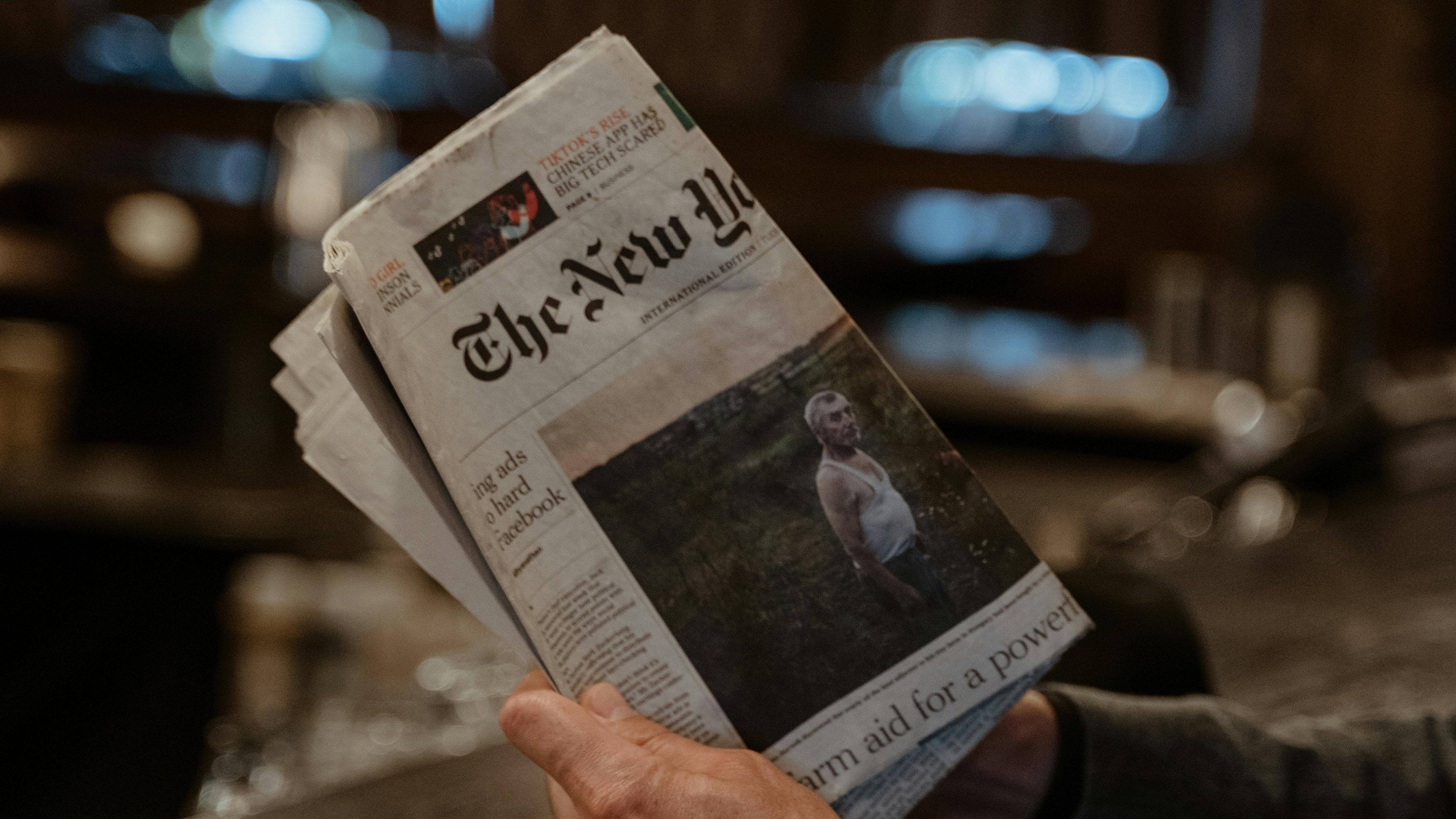
Stories are plastered on your news feed every morning, telling you the events of the previous day.
They’re shared at the dinner table, where family recounts times of hardship or resilience.
Even job interviews depend on how well you know your story.
Stories matter, especially yours – young inner dialogue and your perception of yourself and the world around you.
However, not all stories are made or interpreted as equal.
Some stories can help us think more fondly of others, and some stories might encourage us to seek status over others.
In this article, I will explore the nature of stories, how they’re used, and how you can utilize the power of stories in your own life.
What is a Story?
A story is an account of events and/or people over time – essentially it is fictional and nonfictional history.
Even the word “story” comes from “historia“, the Latin word for history.
In Greek etymology, the word “historía” referred to knowledge, testimony, and inquiry.
The term “histōr” refers to a wise or learned individual, someone who accumulates wisdom through stories.
Stories have been sources of knowledge, wisdom, morals, cultural values, and traditions – passed down from generation to generation for thousands of years.
Evolutionarily, stories are one of humanity’s most important tools.
Stories could have improved survival rates purely by eliminating the risk of trial and error.
Additionally, they reinforced group cohesion – shared values, morals, and traditions are ways of improving your belonging to a tribe, thus being more likely to survive with your shared resources.
However, stories are rarely blank instruction manuals – they are layered with meaning and implication.
Context, character, and actions all yield some sort of value in meaning.
If you can understand the meaning of a story without having lived it at all, then you have the advantage of knowing the message but also never having had to endure the risks to illuminate it.
Stories are essentially vicarious models for teaching crucial life lessons.
Many of those lessons, often to help with group cohesion, are based on empathy and care.

The Relationship Between Story & Empathy
There’s plenty of research to suggest that stories grow the ability to be empathetic with others.
The positive effects of fiction on education and moral development have been studied since the 1990’s and on empathy since the 2000’s.
In 2012, Dr. Johnson performed a study that showed an empirical link between consuming narrative fiction, empathy, and helping behavior.
In 2013, Another study found that fiction can increase empathy over time, only if the reader is emotionally engrossed in the story.
A study in 2012 found that nonfiction narratives increase compassion towards marginalized groups, and another found that narratives increased empathy towards “disliked” groups of people.
A meta-analysis in 2025 analyzed 25 different studies on stories, finding that stories create moderate, yet consistent increases in empathy, especially when a reader feels “present” in a story.
These studies, and more, show empirical evidence to show that both fiction and nonfiction stories are linked to more empathy, compassion, and helping behavior.
It makes sense – a story is a fictional or real person’s situation that you place yourself in using your imagination – to get a front row seat to someone’s inner landscape of what they feel, think, and believe.
However, not every story is meant to foster empathy – the meaning of stories can be molded to the personality of their writer.
The Relationship between Story & Superiority
Stories can foster empathy, or highlight the status and power of those posited to be superior to the common person.
In psychology, we call this the “Great Man Theory“.
Essentially, the Great Man Theory posits that history tends to orient around stories of leadership and their innate qualities – a tendency that mimics the worship of the pantheon of Greek gods.
While early hero stories might have promoted well-intentioned aspects such as noble and heroic deeds, the issue centers on “being” rather than “doing“.
There is a significant difference between wanting to help people like Heracles, and desiring to be a demigod like Heracles – one is about prosocial action, the other is about status.
Status that would highlight an innate superiority – “being” a great person.
Great man theory isn’t a problem of heroism – it’s a problem of what we attribute that heroism to.
You don’t need to be a great person to do great things, and you don’t need to do great things to be someone worth having around.
I suggest that individuals who seek great man stories are more likely to have a lower self-esteem.
A self-esteem that needs to be compensated for with superior action to become someone worthy.
The issue is that (1) this is a common driver of narcissism and (2) The grand majority of leaders in human history have been narcissistic.
Stories of narcissistic leaders, that fascinate those with low self-esteem at risk of developing narcissistic personalities, could be considered very volatile stories – dangerously grandiose interpretations of human history and nature.
The Narrator Matters
The narrator’s interpretation and attribution of events in a story determine if it will foster empathy or tempt you with grandiosity.
For example, the fictional series Dune (1965) is an example of Paul Atreides, the protagonist, who slowly loses his sense of self in his search for power. However, this is obvious in the narrator’s description of events – there is no assertion that Paul is living a moral or ethical life worth looking up to.
A nonfictional example is Napoleon Bonaparte, the French general and emperor in the early 1800’s. While the French revolution uprooted the monarchy, Napoleon established himself as a dictator – betraying the democratic ideals of the revolution.
While his rise to power frightened the monarchs of neighboring European nations, he attempted to be a pseudo-monarch – to have the status and supposed superiority without the lineage.
Even today, Napoleon is often regarded as a “great man” simply due to how his story has been narrated across time.
For fiction and nonfiction, narration is the lens through which a story shines – does it emphasize compassion or does it encourage grandiosity?
That’s not to say you can’t narrate a story your own way – even if the narrator doesn’t share your point of view.
However, it’s important to choose your stories well, and interpret them cautiously.
Trust the Humanizing Stories
I imagine fictional stories that humanize others, nature, or inanimate objects are more likely to foster empathy.
I also imagine nonfictional stories that humanize marginalized groups or people you’re biased against will do the same.
At the same time, nonfiction stories that dehumanize others are propaganda, often from the mouths of narcissistic individuals compensating for low self-esteem with a desperate ploy for power.
Fictional great man stories can dehumanize everyone around a protagonist, making them that much more special by degrading the value of everyone else.
Who can be “great” if there’s no one to be “greater than“?
Empathizing with others often means you’re not trying to be better than anyone else – you’re trying to understand how someone can live their life – just like you do, humanizing yourself and others.

Write the Stories You Want Others to Read
At the center of narrative, empathy, and narcissism is the self – your stories.
Every time you show compassion – that is a story others may watch and become more compassionate themselves.
Every time you speak about someone or share a story, you are allowing others to see life from a different pair of eyes.
The life you live and the stories you share are the building blocks of a better tomorrow.
It doesn’t have to be a book, it can be one small act of kindness that changes someone else’s story for the better.

 Reflections
Leave a comment