

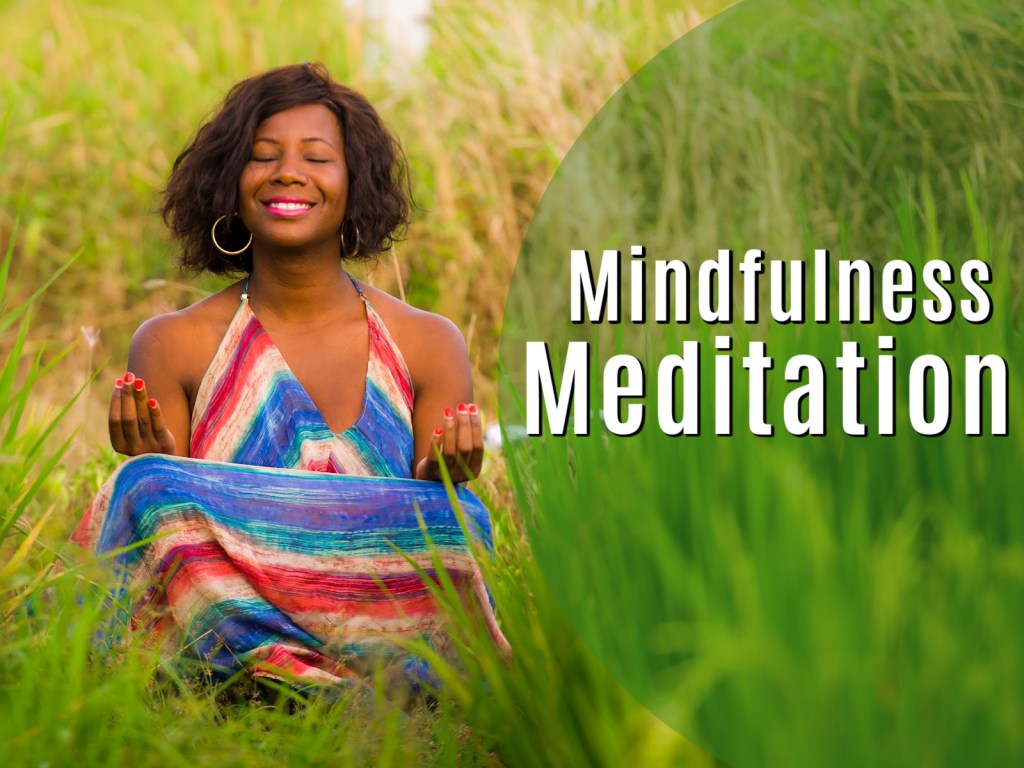
Meditation is an ancient practice, supported by extensive research confirming its many benefits. It’s also remarkably simple and cost-effective—requiring only a quiet space and 10 minutes of your time. Among the various forms of meditation, mindfulness meditation stands out for its ability to ground awareness not only in your surroundings but also within yourself. This practice can ease anxiety, create lasting neurological changes in the brain, and enhance awareness of your body, emotions, and thoughts. Developing a deeper, nonjudgmental understanding of your mental health helps you better address your needs. In this article, we explore how just 10 minutes of mindfulness meditation a day can leave a lasting, positive impact.
Why Am I So Distracted?
When our minds wander, our entire day can veer off track. Distraction stems from various sources—worry, exhaustion, and multitasking among them. At its core, distraction occurs when our attention is pulled away from where we want it to be. While attention is voluntary, stress and an endless array of modern distractions make it easy to lose focus. Often, anxiety is at the root of distraction, trapping us in spirals of procrastination. Distraction is also tied to impulse control and our ability to face emotions—both regulated by specific brain regions.

What Is Mindfulness?
Mindfulness is the antidote to distraction. Instead of being pulled away by external forces, mindfulness gently brings you into full awareness of the present moment. Anxiety often drags attention into the clouds, leaving you feeling mentally foggy or seeking distractions like TV, social media, or games to escape discomfort. Mindfulness counters this by grounding you in the tangible world—what you can see, hear, touch, and feel in real-time. It encourages engagement with the present rather than being controlled by worry.
The Neuroscience of Attention
Sustaining attention involves multiple brain regions, with the prefrontal cortex (PFC) playing a leading role. The PFC is composed of two critical parts: the dorsolateral prefrontal cortex (DLPFC), responsible for maintaining focus, and the anterior cingulate cortex (ACC), which helps monitor conflicts and errors (3).
However, attention isn’t regulated by the PFC alone. The parietal cortex also plays a key role, particularly the posterior parietal cortex (PPC), which helps shift attention to relevant stimuli. Together, the PFC and PPC form a network that governs attention and focus (4).
Anxiety and worry can disrupt this system. The locus coeruleus (LC), located in the brainstem, functions like the body’s internal alarm, managing alertness and producing norepinephrine, a stress hormone that influences attention. Excessive LC activity can heighten anxiety, making it harder to focus (3).

How Does Mindfulness Meditation Affect the Brain?
- Strengthens the neural networks of the PFC, particularly the ACC, improving attention control and emotional regulation (1).
- Enhances communication between the PFC and PPC, increasing focus and resilience against distraction (2).
- Regulates the LC, reducing excess norepinephrine production and promoting a calmer, more centered state of mind (4).
By fostering these neurological improvements, mindfulness meditation becomes a powerful tool for sharpening focus and managing stress. But what should we focus on when practicing mindfulness?
Understanding Mental Health Awareness
Mental health awareness involves recognizing and understanding both your own thoughts and emotions and those of others. While self-awareness covers all aspects of one’s behavior, mental health awareness specifically focuses on emotional and cognitive well-being. This doesn’t mean overanalyzing yourself, but rather observing your inner state with curiosity and without judgment. Recognizing and addressing your mental health needs is just as vital as responding to physical cues like hunger or thirst. Mindfulness meditation enhances this awareness, helping you cultivate a healthier relationship with your thoughts and emotions.

How to Practice Mindfulness Meditation
All you need is a quiet space, a comfortable seat, and 10 minutes of your time.
- Set your intention to focus on your breath and present moment awareness.
- Set a timer for 10 minutes.
- Sit comfortably with relaxed shoulders and closed eyes.
- Take slow, deep breaths, focusing on the sensation of each inhale and exhale.
- Observe internal sensations—emotions, physical discomfort, or wandering thoughts.
- Accept each sensation without judgment, resisting the urge to label them as “good” or “bad.”
- Repeat this practice regularly. Consistency is key to experiencing long-term neurological benefits.
Studies show that consistent meditation practice leads to measurable changes in the brain. For example, the hippocampus—critical for focus, learning, and memory—physically thickens with increased gray matter, reinforcing cognitive function over time (5).

Conclusion
Mindfulness meditation is a simple yet powerful practice with profound benefits. With just 10 minutes a day, you can enhance focus, reduce anxiety, and develop a deeper awareness of your mental well-being. While starting a meditation routine may feel challenging, the long-term rewards make it well worth the effort. By incorporating mindfulness into your daily life, you cultivate a more present, balanced, and mentally resilient self.
Please Subscribe & Share!



Sources
- Do-Hyung Kang, Hang Joon Jo, Wi Hoon Jung, Sun Hyung Kim, Ye-Ha Jung, Chi-Hoon Choi, Ul Soon Lee, Seung Chan An, Joon Hwan Jang, Jun Soo Kwon, The effect of meditation on brain structure: cortical thickness mapping and diffusion tensor imaging, Social Cognitive and Affective Neuroscience, Volume 8, Issue 1, January 2013, Pages 27–33, https://doi.org/10.1093/scan/nss056
- Kajimura, S., Masuda, N., Lau, J.K.L. et al. Focused attention meditation changes the boundary and configuration of functional networks in the brain. Sci Rep 10, 18426 (2020). https://doi.org/10.1038/s41598-020-75396-9
- Roisin McMackin, Stefan Dukic, Emmet Costello, Marta Pinto-Grau, Antonio Fasano, Teresa Buxo, Mark Heverin, Richard Reilly, Muthuraman Muthuraman, Niall Pender, Orla Hardiman, Bahman Nasseroleslami, Localization of Brain Networks Engaged by the Sustained Attention to Response Task Provides Quantitative Markers of Executive Impairment in Amyotrophic Lateral Sclerosis, Cerebral Cortex, Volume 30, Issue 9, September 2020, Pages 4834–4846, https://doi.org/10.1093/cercor/bhaa076
- Sarter, M., Givens, B., & Bruno, J. P. (2001). The cognitive neuroscience of sustained attention: where top-down meets bottom-up. Brain research. Brain research reviews, 35(2), 146–160. https://doi.org/10.1016/s0165-0173(01)00044-3
- Zhang Y, Chen S, Zhang Z, Duan W, Zhao L, Weinschenk G, Luh WM, Anderson AK, Dai W. Effect of Meditation on Brain Activity during an Attention Task: A Comparison Study of ASL and BOLD Task fMRI. Brain Sci. 2023 Nov 29;13(12):1653. doi: 10.3390/brainsci13121653. PMID: 38137100; PMCID: PMC10741430.
Key Tag Words:
Mental health tips, Mental health awareness, Mental health service, Free mental health services near me, Mental health awareness month 2024, Social media and mental health, mental health counseling, stress management techniques, anxiety treatment options, show to manage anxiety in daily life, benefits of mindfulness meditation for stress, online therapy platforms for depression support, Mental health services, Depression symptoms, Anxiety treatment, Stress management techniques, CBT, therapy,


 Reflections
Leave a reply to Aman Singh Cancel reply