By: Camden Baucke MS LLP
The word “narcissist” is thrown around quite often these days.
It’s talked about with friends, family, and on social media – so I thought it would be helpful to clarify what it is and what it isn’t.
Narcissism isn’t a light topic, and narcissistic individuals are frequently responsible for harming others – if you have been hurt by a narcissistic person, please be cautious and take care of yourself as you read this article.
If this blog post proves too distressing at any point, put it away – it can wait for another day.
Now, let’s get into the basics.
What is Narcissism?
Narcissism is a mental health disorder as listed in the DSM-V, the diagnostic manual for mental health professionals.
It is also classified as a personality disorder (keep in mind that personality disorders are still highly debated in mental health research communities for several reasons).
Narcissistic Personality Disorder (NPD) is part of a group of personality disorders called Cluster B.
Cluster B personality disorders include:
- Antisocial Personality Disorder (APD) – Characterized by deception, impulsivity, & lack of remorse.
- Borderline Personality Disorder (BPD) – Characterized by emotional instability, fear of abandonment, and unstable relationships and self-image.
- Histrionic Personality Disorder (HPD) – Characterized by excessive emotionality and attention seeking.
- Narcissistic Personality Disorder (NPD) – Characterized by grandiosity, need for admiration, apathy, and fragile self-esteem.
While these disorders have their own distinct characteristics, they all share three major components:
#1 – Lack of empathy.
#2 – Erratic Behavior and Temperament.
#3 – Unstable Relationships.
While I’m going to talk about narcissism individually, the other Cluster B personality disorders are often swept up into the category of narcissism.

How Prevalent is Narcissism?
Narcissism affects about 1-2% of the global population.
In the clinical population, 1.3-20% of people are diagnosed with NPD.
While this seems like a small number, 1% of 8 billion people is still 80 million people.
However, assessment methods are still in the works – meaning that we’re still not the best at identifying narcissistic individuals with objective metrics.
Additionally, people who believe themselves to be superior rarely receive clinical care or seek assessment.
That means even 80 million people might be drastically less than how many people actually qualify for NPD across the globe.
Signs & Symptoms of Narcissistic Personality Disorder (NPD)
1 – Grandiosity
Someone who is grandiose has an exaggerated sense of self-importance – believing themselves to be superior.
This is different from having big dreams or aspirations for work – this means someone actually believes they are currently better than most other people.
Their belief in “being special” is exclusive – where only other high-status people can “understand“ how special they are.
It’s the equivalent of believing they are a hero among mediocre citizens, who can only associate with all the other titans of the world.
Grandiosity is a facade of false and exaggerated beliefs in self-importance that contradict reality.

2 – Fantasies of Success or Power
When someone truly believes they’re superior, they have dreams of a superior life.
A narcissistic person might constantly believe they’re in the process of attaining:
- Unlimited volumes of success.
- Brilliance admired by all.
- Beauty that is second to no one.
- Popularity, abundance, and subservient love.
A key distinction I need you to remember is that fantasies of power are not always the same as specific and high aspirations achieved through hard work and opportunity.
Did you notice all the fantasies in the list are vague? That’s because someone who is narcissistic often doesn’t want success for what it realistically is, only for what it means about them.
It is not the desire for heroic deeds, but the fantasy of being a hero.
If you want your project to be successful? Go for it.
If you want your fundraiser to help lots of underprivileged people? Be my guest.
If you fantasize about being so magnanimous that it would confirm your superiority? That leans towards narcissism.
3 – Need for Excessive Admiration
What is a celebrity without their fans?
Narcissistic individuals tend to need the admiration of others.
One issue with believing yourself to be exclusively special is that reality doesn’t obey that belief.
Mistakes and suboptimal outcomes are part of the human condition.
For narcissistic individuals, anything less than admirable feedback is often rejected and retaliated against.
Admiration is not the same as simple validation – validation is acknowledgement, admiration is praise.
When not praised, a narcissistic person might claim victimhood – that they were not given the praise they deserve.
They might manipulate and punish anyone who doesn’t give them the admiration they are “entitled to“.

4 – Sense of Entitlement
Entitlement is when someone falsely believes they already deserve what they need to earn in reality.
A narcissistic person might not just believe they’re superior and desire a superior life, they might demand everyone to confirm their false beliefs – to give them what they’re entitled to.
A narcissistic parent might abuse and neglect their children, but feel entitled to their trust and love.
They might feel entitled to grand respect and favors from strangers, coworkers, or sources of authority.
A narcissistic individual might expect someone to automatically comply with their commands.
When they’re not appeased, a narcissistic individual may play victim – claiming they have been slighted due to not receiving what they believe they deserve due to their superior status.
5 – Socially Exploitative
Narcissistic individuals tend to use their relationships in a transactional way – often exploiting friends, family, and neighbors.
This might underlie the “why” in their relationships. They might be connected with someone to achieve something other than connection, love, or community.
Relationships might offer them admiration, more connections, wealth, more power, and so on.
When narcissistic people become friends to achieve an aim, they are trying to achieve narcissistic aims through someone, rather than enjoying life with someone.
When others don’t serve a purpose in your life beyond what they can give, people become tools – and lose their humanity.

6 – Lack of Empathy
If you are just a tool or a threat, narcissistic individuals might not see you as fully human.
Empathy is necessary for most healthy relationships – it’s what allows us to imagine the mental and emotional existence of others – helping us stay accountable for how we can affect those around us.
When you imagine how someone feels or thinks, it helps you treat them accordingly – it humanizes them.
However, if a narcissistic person humanizes somebody, that means that they’re just a little less special than before.
This can’t stand, because narcissism is where your thoughts and feelings matter more than everyone else’s.
There is little to no room for complexity or compassion when it doesn’t serve a selfish purpose.
If you hurt someone’s feelings – it doesn’t matter.
Someone wants you to apologize for hurting them – play victim and manipulate them so they go away.
A narcissistic person probably lacks empathy, often hurting every relationship they have.
7 – Envy
Narcissistic individuals are frequently jealous of others, typically in regard to the fantasies they desire.
If it be success, wealth, beauty, or brilliance, they might be envious of anything above what they have.
Someone bought a new house? They’re jealous.
Their friend traveled to Europe? They’re envious.
They rarely ask you how your travels were or how you’re enjoying your new home – they often act passive-aggressively and express their envy through manipulative slights.
Because if a narcissistic and “superior” person doesn’t get what they’re entitled to – and other people do – then the world isn’t fair in their eyes.
Inversely, a narcissistic person might assume someone is envious of their superiority.
They may believe others admire and adore just how amazing they are – which is, again, all stemming from grandiosity.
8 – Arrogant & Critical Behavior
A narcissistic person is often dismissive, condescending, and patronizing.
This isn’t just what they do, it’s their attitude and the atmosphere they create.
It fits their mental framework – if people aren’t as superior or human as you, they aren’t deserving of decent treatment.
If you’re decently aware, you can probably tell when you’re interacting with a narcissistic person due to their demeanor, but now always at first.
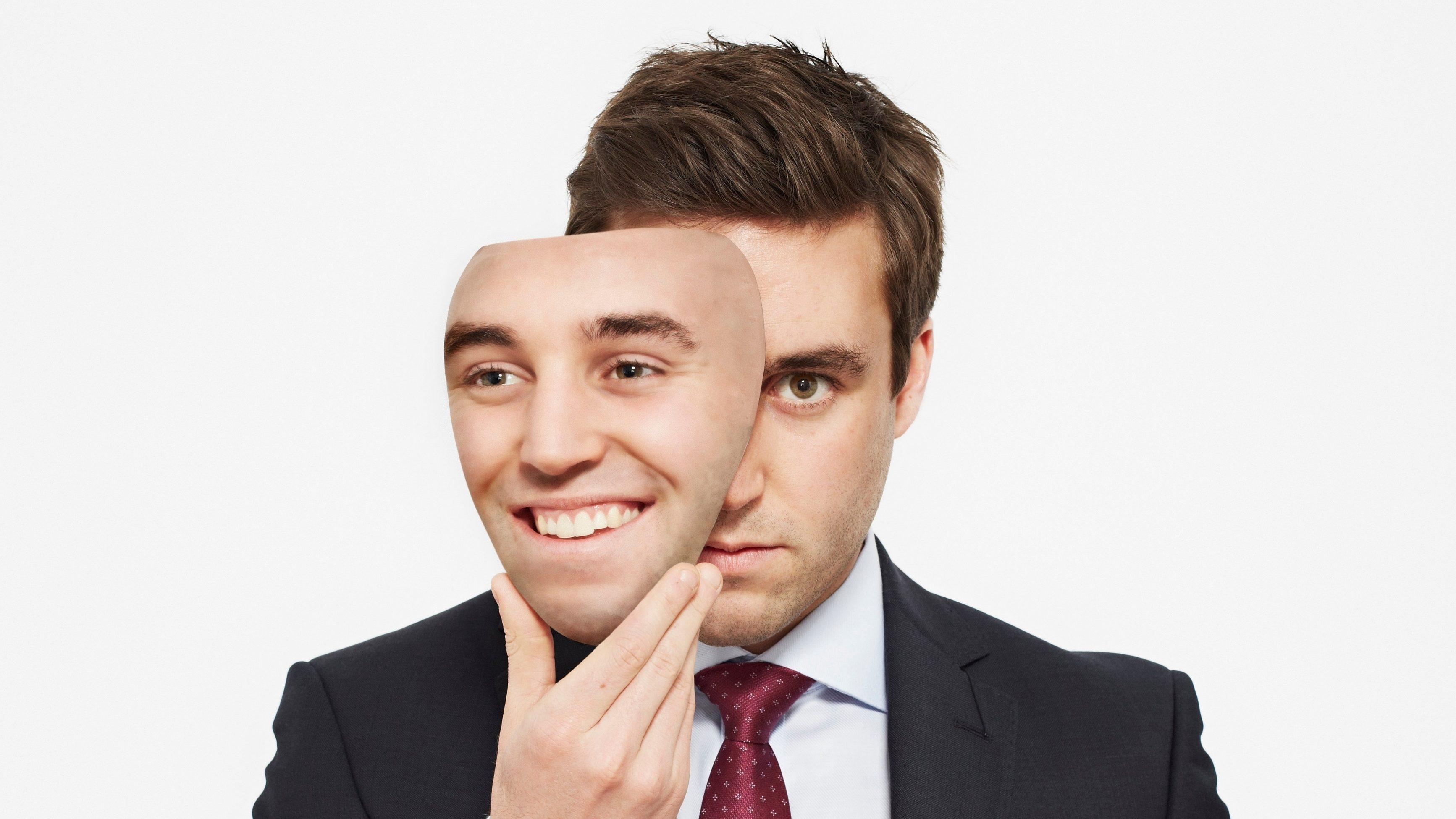
A narcissistic person might mask their grandiosity with love bombing, extreme confidence, or charisma.
Only when you’re their child, their parent, their partner, their long-time friend, or their experienced coworker, do you often experience the fully unmasked wrath of narcissism.
To maintain their need for superiority, narcissistic persons will bring you down to lift themselves up.
Narcissistic individuals often do an extensive amount of psychological and emotional damage to the people around them – on purpose, not by accident.
What Does Narcissism Sound Like?
1 – Grandiosity
- “I mean, I don’t like to say it, but I’m usually the most capable person in the room.“
- “Most people just don’t think on the level I do.“
- “I am the best, even if no one realizes it.”
2 – Fantasies of Power or Success
- “It’s just a matter of time before I win and then people will finally get it.”
- “I’m not meant for average life. I see something bigger for myself.“
- “I don’t want to be mediocre like everybody else.“
3 – Need for Excessive Admiration
- “It’s frustrating when people don’t acknowledge how much I actually bring to the table.”
- “I just wish people appreciated me the way I deserve.“
- “Why don’t you trust me when I’ve done so much for you?”
- “You should love me, you’re ungrateful if you don’t.”
4 – Sense of Entitlement
- “I shouldn’t have to deal with this – it’s honestly beneath me.”
- “If they knew who I was, they’d treat me differently.“
- “I should be more loved and appreciated than I am.“
5 – Socially Exploitative
- “If I invest in you, I expect you to give me a return on that investment.”
- “You just have to use people for what they offer you – it’s how the world works.“
- “You better be obedient because I don’t need to help you.“
6 – Lack of Empathy
- “Too bad, I’ve got my own stuff to worry about.“
- “You’re overreacting – it’s really not that big of a deal.“
- “People don’t like me because they’re intimidated, not because I’ve done anything wrong.”
7 – Envy
- “They don’t deserve to go on that trip, I do.“
- “Let’s be honest, most of them wish they had what I have.“
- “People wish they were my best friend.“
8 – Arrogant & Critical Behavior
- “I don’t expect you to understand – it’s kind of a higher-level thing.”
- “I’ve thought this through more than you have.“
- “I’ve just had more experience with this kind of thing.”
Common Thread
Most of these symptoms are not direct attacks.
Most are passive-aggressive assaults that can manipulate you by maintaining plausible deniability.
A narcissistic person can make their insults sound reasonable – Often to disable your mental defenses and allow them to hurt you.
These quotes resemble a narcissistic person who believes they are superior to you and invulnerable to anything you might say to hold them accountable or contradict them.

Why Narcissism Can be Confusing
Narcissism can be hard to pin down due to its manipulative nature.
If a parent isn’t feeding, loving, or helping their child – that’s typically neglect.
If a child is not feeding or helping their able-bodied parent – then that’s a typical childhood.
The action can be the same, but the context of a situation can determine everything about a behavior.
Most of the time, it’s noticeable by the existence of contracts – social or biological.
For instance, parents are biologically obligated to nurture their children with structure and warmth.
For girlfriends, boyfriends, partners, spouses, there is a social contract to love and protect.
You also have contracts like leases, mortgages, job offers, and so on.
Every type of contract requires consent.
However, narcissism is the tendency to believe that, due to one’s superiority, there are social contracts that don’t exist in reality.
Narcissistic persons hold you accountable to transgressions that aren’t transgressions, and can manipulate you into believing that you broke a rule of a contract you never agreed to.
Let’s Straighten Out Some Narcissistic Rules
- Your children don’t have to trust you.
- Your friends don’t have to love you.
- Others can think negatively of you.
- Loved ones don’t have to endure your behavior.
- Adults don’t have to be obedient to you.
- Everyone doesn’t need to believe you.
- Strangers don’t need to respect you.
- Others can be different from you.
- You can be wrong.
- You can be hurtful.
If you, or someone you know, thinks these rules are false- then a belief in their false superiority might be dehumanizing others – stripping them of their free will.
When your rules for yourself oppress someone else’s free will – you may then value yourself above all, meanwhile diminishing the value of what anyone thinks, feels, believes, or does.

What’s Behind Narcissism?
The irony of narcissism is how a truly fragile self-esteem is compensated for with superiority.
Most folks can recognize that narcissism is a reactive belief system.
It’s often established when you’re growing up, because that’s when our self-image forms – when our brains do something called “individuation“.
If something goes wrong in that crucial period of identity development, your self-esteem can be compromised.
Trauma and adverse childhood experiences (ACEs) are often responsible for destroying a child’s self-esteem during individuation.
Trauma and ACE’s can come from parents with experiences like abuse or neglect, but also social stressors like socioeconomic status and bullying from peers.
Essentially, a child comes to believe they’ll never be enough, but they might not decide to stay in that framework forever.
It’s hard to live a decent life while believing you are worthless at your core.
It’s natural to compensate by going to the opposite extreme – superiority.
A narcissistic child might adopt a false belief in superiority because life taught them they were worthless.
To be fair, parents might also do the opposite, where they overpraise their children without grounded effort.
Those children are just adopting the mental framework for themselves that their parents teach.
Either way, narcissism may be a reactive belief system created during childhood identity development – in response to trauma or ACEs consisting of neglect, abuse, or bullying – resulting in low self-esteem that depends on the veneer or superiority.
Or a child was simply taught they were better than everyone else.
Are Narcissistic People Responsible?
No and yes.
No kid is responsible for childhood trauma or ACEs, nor how they were raised.
No child is responsible for their parent’s or peer’s actions that degraded and bullied them.
No child is at fault for feeling worthless.
Yes, those kids grow up and are responsible for their baggage.
Yes, narcissistic reactions are often responsible for hurting others.
Yes, narcissistic individuals are responsible for finding a healthier and realistic self-image of themselves.
Childhood trauma and ACEs are no excuse for gaslighting, manipulation, bullying, abuse, or neglecting others – especially those who depend on you.
This is a phrase I often use in therapy:
You’re not responsible for what happened to you, but you are responsible for what happens through you.
Narcissistic individuals are accountable for every single one of their actions.
However, acknowledging their mistakes or flaws, let alone apologizing for them, might sacrifice their veneer of superiority.
That is no one’s problem but their own – everyone is responsible for their own insecurities.
Narcissistic adults are responsible for facing their own fears – and not at the mental and emotional expense of everyone around them.
If you are hurt by a narcissistic person who can’t take accountability – find ease in the fact that you are likely not responsible for what they accuse you of.
You aren’t wrong if you don’t abide by rules that you didn’t consent to, especially if they stem from a narcissistic person’s ill-perceived superiority.

What Isn’t Narcissism?
There’s plenty of things that aren’t narcissism.
For example, a narcissistic person might call you a narcissist for setting boundaries.
Because if you set boundaries, that means there’s something negative against them that’s worth setting a boundary for – threatening their veneer of moral superiority.
However, setting boundaries is typically not narcissism.
Self-care, with no expense to anyone else, is not narcissism.
Standing up for yourself when truly mistreated (according to contractual and consented rules, not superiority rules) is not narcissistic.
Narcissism is not when someone thinks of themselves or doesn’t do what you want – it’s when someone coerces you into believing the lie they tell themselves – that they are superior.
If you’re truly worried, run an easy and telling experiment.
Take full accountability for every mistake you’ve made.
A strong self-esteem, that doesn’t lend to narcissism, can bear the weight of acknowledged wrongdoing.
If you can actively seek accountability and take it with calmness, compassion, respect, and self-regulation, then you’re good.
If you can’t acknowledge faults or flaws, or you try to wiggle your way out of accountability, attempting to make your perspective seem more “understandable” because “nobody’s perfect“, then you might have narcissistic tendencies.
If you realize your own narcissistic tendencies, go to therapy.
If you realize the effect of narcissistic people in your life, then you might need to go to therapy as well.
Final Thoughts
Thinking about yourself isn’t narcissistic.
If you think about yourself as superior and invulnerable to wrongdoing – that is narcissistic.
There’s usually a painful past behind most narcissists, but that’s no excuse to hurt anyone.
They hold themselves to superiority rules, enforcing them on anyone who interacts with them.
You don’t have to follow those rules, and you don’t have to take the consequences for breaking them.

 Reflections
Leave a comment