
By: Camden Baucke MS LLP
Tell me if this sounds familiar.
You interact with an old friend and they do something that obviously or passively hurts you.
Contemplating your options, you decide to trust this old friend and tell them how you feel.
When they hear you hold them accountable for their actions, they burst into a tirade.
For the next hour, you end up in a conflict with raised voices and leave regretting having said anything at all.
If this sounds familiar, you probably know all about defensiveness.
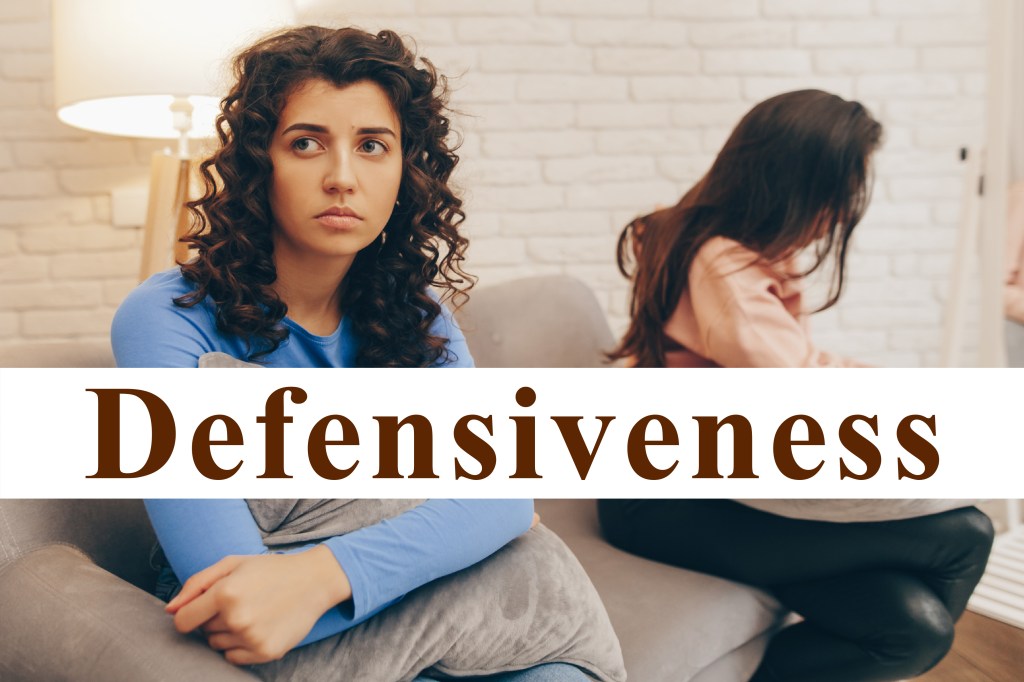
For this article, we will tackle this last horseman of the relationship apocalypse – including what it is, what it does, what it sounds like, its common causes, and what you can do about it.
What is Defensiveness?
Defensiveness is one of the four horsemen of the relationship apocalypse, coined by the world renowned Gottman psychologists.
That means it is one of four research-based interactions that could contribute to the catastrophic end of a relationship.
Defensiveness is a communication style characterized by attacking, which is quite ironic.
Not just attacking a person, but attacking the reasoning for why they’re being held accountable.
Defensiveness is essentially fending off accountability for one’s actions with aggression or evasion.
In everyday circumstances, it means the defensive person must give something. They must either take accountability for their actions or change their behavior.
For reasons we’ll talk about, someone may decide not to give. That in fact, accountability may seem like something more than just taking ownership of their actions.
As a result, they might shoot down the person holding them accountable.
They can intimidate, insult, and manipulate into understanding more than accountability.
Meanwhile, the person holding them accountable might be already hurt.
It’s hard to trust someone enough to share how they hurt you, just for them to hurt you again.

The Aftermath of Defensiveness
As you can guess, defensiveness can be quite devastating to the person being defensively attacked.
Accountability is a vital component of adult relationships – we have to be held to the outcomes of our actions, especially if they impact our loved ones.
When your partner doesn’t take accountability, and is willing to hurt you to avoid it, this makes for a pretty volatile atmosphere.
Willing to be right, but ready to attack if wrong?
It’s an effective method for instilling fear and helplessness into those closest to you.
Fear, because attacking in response to openness usually wounds trust and closeness.
Helplessness, because few people feel safe when their closest connections have no intent of managing their behaviors and how they can affect you.
Defensiveness creates emotional distance and can destroy someone’s sense of safety around you.
What Does Defensiveness Sound like?
Escaping accountability can sound like:
Active Defensiveness
- “I wouldn’t have reacted like that if you hadn’t started it.”
- “Why are you always blaming me? You do the same thing.”
- “That’s not what happened, you’re exaggerating.”
- “You’re acting like I’m the only one with problems here.”
- “I already said I was sorry, what else do you want from me?”
Passive Defensiveness
- “I guess I just can’t do anything right.”
- “Whatever, believe what you want.”
- “It’s fine. I’m sorry you feel that way.”
- “You’re clearly upset, so I’ll just stay out of your way.”
- “I didn’t realize everything I do is wrong.”

Common Source of Defensiveness
Defensiveness highly depends on the perspective of who’s defending.
Moreso, it depends on what that person interprets as an “attack“.
A defensive individual might believe that being held accountable is an “attack” on their character, self-worth, and generally take it personally – what it means about themselves as a person.
There’s plenty of sad backgrounds that could cause someone to learn this communication style.
It’s possible that their childhood home was actually abusive and critical under the name of “accountability“.
So you have one person who is hurt in reality and is asking for accountability, and the other person believes that they are being attacked because of what their past taught them.
While it’s understandable, it’s not permissible.
Healthy relationships require transparency about reality – if someone is attacking you over what they falsely perceive is happening, hurting you again, then it’s their responsibility to figure out what accountability means as an adult.
Understanding is meant to balance accountability, not dominate it so someone doesn’t have to be responsible.
Hurting others doesn’t warrant hurting them again by shutting down their reaction.
How to Defeat Defensiveness
Defensiveness depends on past, perspective, and self-control.
Whoever is on the receiving end of defensiveness is not responsible for any of this.
If you are receiving defensiveness, you don’t have to stand for it. You don’t need to comply, be more understanding, or fix it for them. Your job is to manage yourself.
Couples counseling is a great option for collaborative change if you so choose.
Also, any receiver of defensiveness could benefit from individual therapy or groups of friends or community who can validate and support.

For the Defensive Folks
It’s never too late to change your perspective and your behaviors.
If you’ve noticed defensiveness towards your partner, they might also be hoping you’ll make a change.
First, I’d recommend looking at your perspective of accountability – what do you think it is?
If it’s overly harsh and pointing at your character or personality, that’s not true accountability – that’s criticism.
Accountability is for behavior and outcome, not for self-image and manifestations of negative self-perception.
If you notice a difference in your perspective of accountability versus what it really is, then I’d look for the past that informed that.
Once you know your past and the misshaped perspective of accountability it made, it’s time to adopt the true version.
Accountability is an act of kindness – one that reflects meekness and compassion to those you love the most.
Self-control doesn’t stop being your responsibility once you make a mistake – how you clean up messes is as important as trying not to make them.
However, we’re human, so we’re always going to make messes – that’s why accountability is necessary.
To let your loved ones know how you can affect them – because they trust you and willingly let you into their lives.
Final Thoughts
Defensiveness is harmful to relationships, but often reflects a perceived harm from an actually harmful past.
If you’re defensive, it’s time to retrain your brain – adopt the true definition of accountability and seek it out.
Take initiative and take accountability for things your partner doesn’t say.
Accountability is a beautiful thing and often strengthens relationships.
You can earn more trust by taking accountability for your mistakes rather than never making any mistakes at all.


 Reflections
Leave a comment