

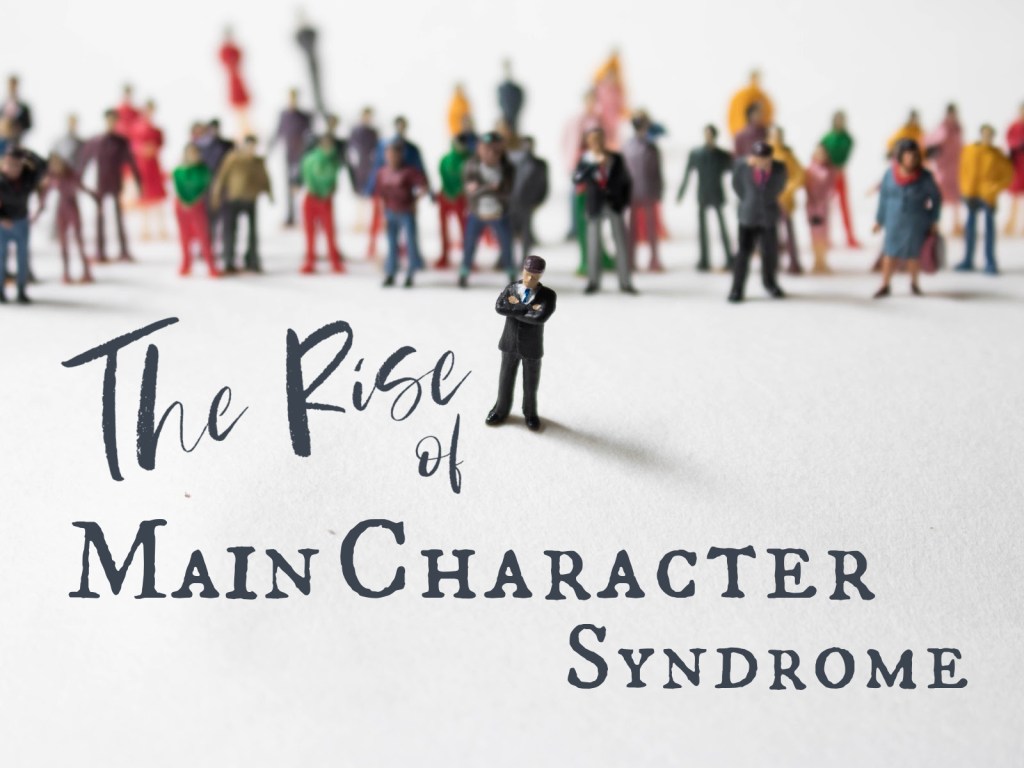
The term “main character syndrome” has recently gained traction. It’s used to describe individuals that behave as if they are the lead role in a movie, story, or game. Essentially, these individuals view everyone else as either just background characters or insignificant altogether. Although you won’t find main character syndrome in the DSM-V, it represents a pattern of disruptive behaviors and social conflict. While someone with main character syndrome might be the hero of their own life, they sustain this view of themselves at the expense of everyone else.
The Effects of Main Character Syndrome
The primary reason main character syndrome is so aggravating is its effect on social dynamics. This includes lacking manners and respect for strangers or ignoring and overstepping with friends and family. Someone with main character syndrome may consistently talk over people, ignore others in conversation, or not consider any opinion but their own. Such attention-seeking and oblivious behavior can leave others feeling alienated, frustrated, resentful, or disconnected. If someone thinks they’re the center of the universe, that means there’s no room for anyone else.
The Evidence of Main Character Syndrome

Main character syndrome is not a clinical diagnosis, but rather used to describe a certain pattern of behaviors. People described as having this label would make decisions that center around themselves to the detriment of others. These behaviors can be seen as the following:
#1. Inconveniencing Others
Main character syndrome is most easily identified by the blatant disregard for other’s existence. This could mean standing in the middle of a street so everyone else must walk around. Inconveniencing others could also be the product of ignoring cultural customs or the preferences of others. Please remember this does not mean doing anything for yourself is bad. However, when something oblivious begins to unnecessarily and negatively impact the lives of others, then it is main character syndrome.
#2. Dominating Conversations
Main characters, like in a video game, control the dialogue. They determine what is talked about and for how long, usually doing all the speaking. Additionally, they might talk over someone or bring up something that is contextually inappropriate. When the only voice that matters is the main character’s, it’s normal to feel like nobody in their presence.
#3. Lacking Empathy & Insight
Main characters are capable of empathy and insight, but they have their focus shifted to themselves. They only desire understanding for their own circumstances and are unwilling to share it with others. Their attention and their emotions will be purely invested in the matters of their own life. When others bring up their life events, they might be treated with apathy or little interest. This looks like little time spent discussing anything other than their interests and even spite that the conversation is not centered on them.
#4. Reckless Endangerment
At the height of main character syndrome is the endangerment of others. A main character might be late for work and decide to drive way beyond the speed limit. However, they place everyone else on the road in danger. On a road with cars full of people, children, hopes, dreams, there exists only one person; the main character. Again, this does not mean meeting your needs is bad, but if it comes at the risk of hurting others, then it’s worth restraining yourself.
What Actually is Main Character Syndrome?

Psychologically, main character syndrome is a parochial view of life akin to narcissism. It is a limited perspective where someone’s experience is universally significant, without the consideration of others. Like narcissism, there is an apathy for others, a desperate need for validation and recognition, and a reluctance to see life outside of one’s own perspective. Underneath it all are likely painful experiences and low self-esteem. However, bystanders and loved ones don’t deserve harmful treatment nonetheless. In fact, the whole folly of main character syndrome is that the best stories are interesting because of the side characters.
Why Being a Side Character is Better

A main character is nothing without the people they meet along their journey. Luke Skywalker is nothing without Obi-Wan, Han Solo, or Leia. Dorothy is nothing without the Lion, Tin Man, or Scarecrow. A main character is only one aspect of a story, as where the other characters fill the story with life and adventure. The best stories are not full of overpowered protagonists, but ones who listen to and connect with others.
Friendships, family, and colleagues are all characters in our lives that do not sit to the side and wait for our line, but instead make our life beautiful through their own perspective and actions. In recent decades, main characters have been depicted as inherently strong, independent, and nearly invincible. In reality, this is not the case. Humans are social creatures, and even a recent study has shown that the Neanderthals’ may have gone extinct due to isolation. Other studies have also shown that humans have survived as well as we have due to social connection and tribes. We can not see ourselves as the main characters in life if we want to live a healthy connected life. The side characters make up our story as much, if not more, than the main character.
What if I Have Main Character Syndrome?

If you can see this in yourself, you’re off to an awesome start. That requires self-awareness and openness to negative things you might be doing. It takes courage to face the worst of your actions, but they can change. Thoughts and attention are moldable, so take some time each day to do the following:
#1. Practice Self-Awareness
Take moments throughout the day to observe how your thoughts and actions might affect others. In fact, it would be beneficial to think of how others are feeling and thinking at any point in time. So once a day, pick a person in your life, and try to walk in their shoes: what do they feel? What are they thinking about? What do they want? What are their fears?
#2. Consider Yourself as a Great Side Character
Find important people in your life and look at the role you play in their story. If you find that it’s negative, then you can change it. Mold your actions so that you can play the comic relief, the protector, or the mentor. You can become the character you want to be in other people’s stories.
#3. Learn Social Cues
Learning social cues means developing an awareness of others needs or actions in social spaces. This could mean reflective listening or walking on the appropriate side of the sidewalk. Social cues means much more than just fitting in. It is giving the same consideration to others that you would hope they would give you.
How to Deal with Main Characters

It’s not easy to navigate a world with others who only think of themselves. The good news is that you don’t have to accept poor treatment. There are methods of navigating this phenomenon, so here are some important things to consider:
#1. Practice Patience
You don’t have to be patient with others because they deserve it, but because you would benefit from it. Understand, for yourself, that someone’s ignorance is not reflective of your value but emblematic of their limited perspective. That is not to say it isn’t rude or unjust, but it is that their actions do not reflect anything about you, and it’s important to trust that.
#2. Set Boundaries
You are not obligated to constantly deal with someone with main character syndrome. Boundaries are self-protective measures you can put in place to not be hurt by someone who can only think of themselves. You can limit your time with them or you can stand up for yourself. It’s time to build up the confidence to stop people-pleasing and to start setting boundaries. Either way, your interactions can not continue as they are. Your health is important enough to create rules for how you are treated.
#3. Do Self-Care
Ironically, the best way to manage someone’s obsession with themselves is to take care of yourself. Anxiety can be typical when talking to someone who sees themselves as the main character. Always have a list of relaxing, fun, or fulfilling activities you can engage in to address stress. You can also do any form of relaxation techniques, even if it be mindfulness for beginners. Just journaling for 10 minutes, or deep breathing for 5 minutes, can improve your mood.
Conclusion
Main character syndrome may just be an internet buzzword, but it also serves as an important reminder: Life is not about being the star of the show. Everyday we have an opportunity to be a memorable and lovable side character in someone else’s story. This is an opportunity to show empathy, to support, and value the perspectives of others. Such a way of living leads to a future of connection and happiness, for you as well as for others. Happiness becomes a gift you can give as well as one that you can receive. After all, the best stories come alive when we consider ourselves and others in a healthy balance.

Please Subscribe!


You can visit our website at GreatLakesMentalHealth.com for more information
 Reflections